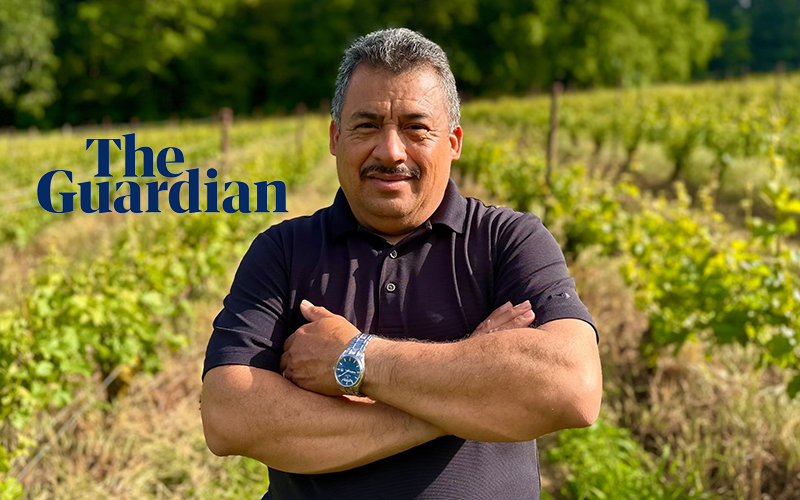
In June 2025, the political became personal. Our long-time vineyard manager, Moises Sotelo of Novo Start Vineyard Service was detained by U.S. Immigration and Customs Enforcement (ICE) and ultimately deported to Mexico.
Because we felt strongly that it was important to keep the focus on Moises, we stayed behind the scenes as much as possible. That meant connecting media to key spokespeople locally, starting up a GoFundMe for the Sotelo family, posting and reposting messages of support (we will never have another Instagram post ever top this one in terms of reach and impact), and generally doing whatever we could to support his family and business.
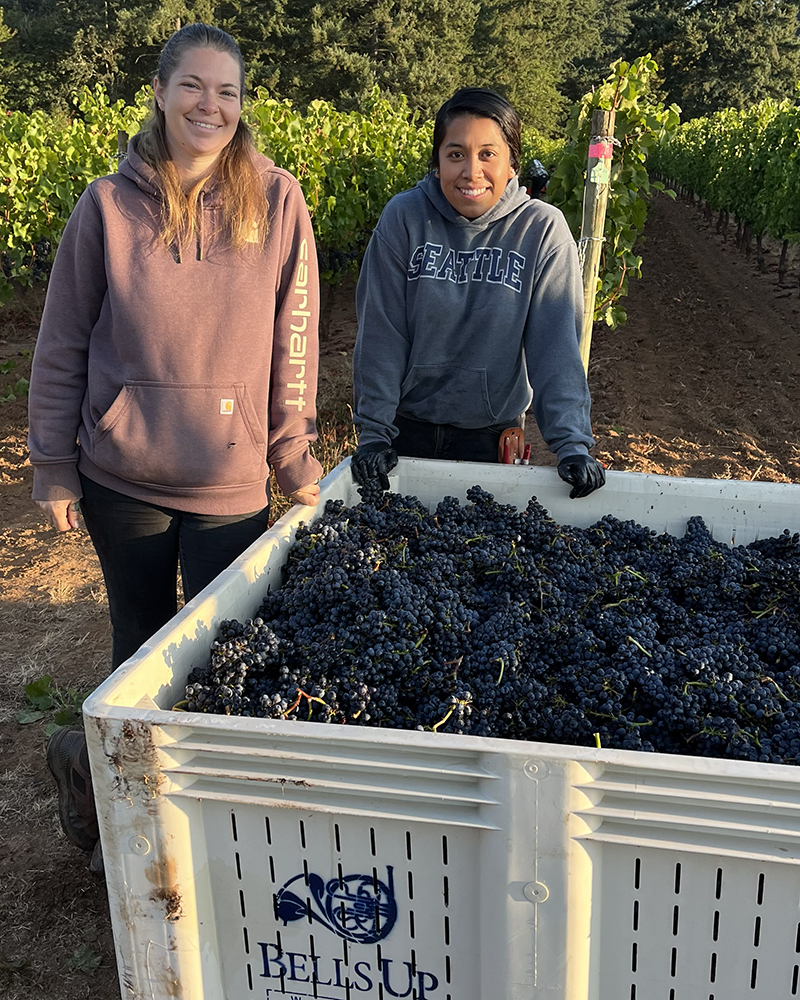
Bells Up’s estate vineyard continues to be managed by Victoria Reader and Alondra Sotelo Garcia.
Notably, we’re proud to still be working with Novo Start, which is now managed by Moises’ daughter, Alondra Sotelo Garcia, and Victoria Reader, Moises’ protege who’s been a huge part of our vineyard’s continued success over the past three years.
The Guardian Follows Moises’ Story
Journalist Cy Neff of The Guardian wrote one of the first articles that brought attention to Moises’ plight to a global audience. In it, he shared how Moises had been a respected figure in Oregon’s wine industry for decades, founding his own vineyard management business and helping vineyards thrive across the region.
Despite widespread community support and questions about the government’s claims regarding his immigration and criminal history, Moises was deported in July 2025, leaving behind his wife and three children.
Neff recently revisited the story, writing a follow-up on the aftermath of Moises’ deportation. He focused on Alondra, detailing how she abruptly left her job and moved back to Newberg to take over the family business. His article explores how she’s navigating steep learning curves in both viticulture and running a small enterprise amid a global downturn in wine sales. She now balances business operations with managing her parents’ resettlement in Mexico and supporting her younger siblings, all while contending with the emotional toll of family separation.
The Vineyard Persists
When Neff reached back out to us, asking if we would like to be interviewed, Dave agreed. Reflecting on what Sotelo’s absence means to the region, Dave encapsulated the loss in stark human terms:
“Here was a guy who was a dad and a business owner and an employer and an elder in his church. This is the kind of guy that you want your children to grow up to be. So when we lose those people it does nothing but make our society worse.”
Ultimately, Moises’ deportation was not just the removal of a single individual but a blow to the fabric of the local wine community, where immigrant labor and leadership are deeply embedded. 2025 was not an easy year, but we are grateful that Moises’ legacy lives on in our vines and his business—which we are happy to have back in our vineyard again this year.